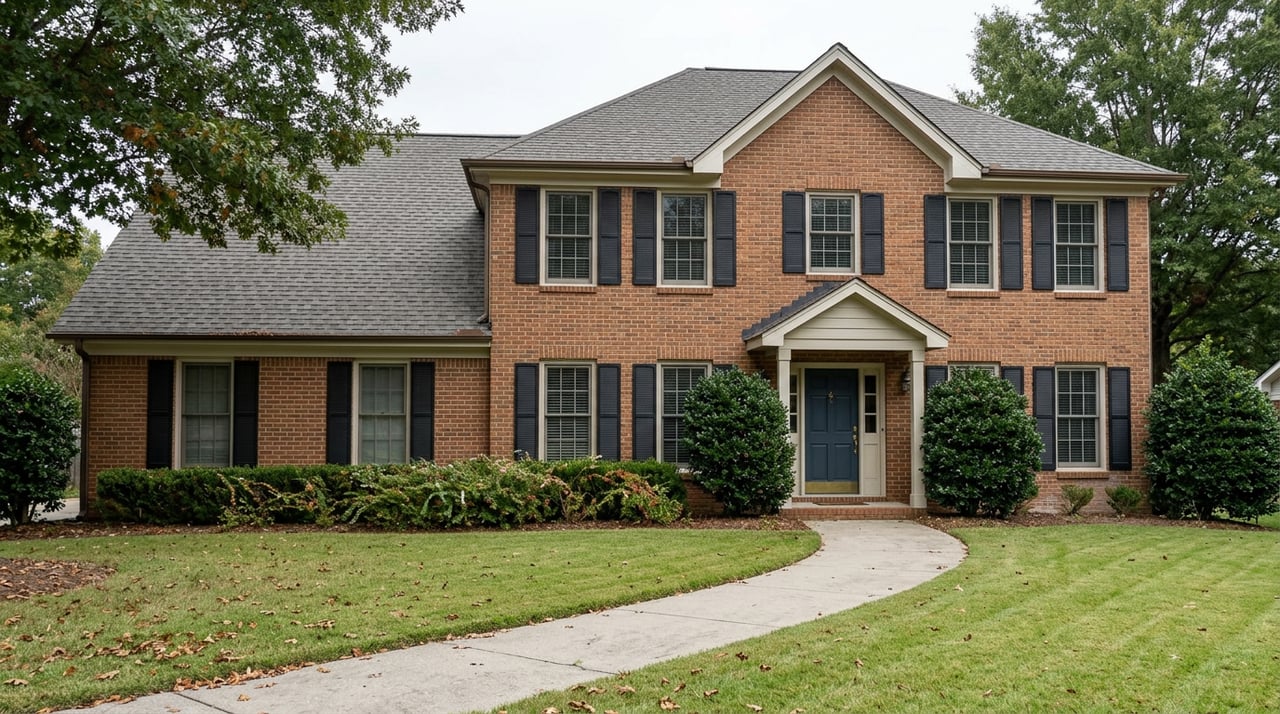
In East Baton Rouge Parish, Two Homes at the Same Price Can Have Very Different Monthly Payments
August 27, 2026
August 27, 2026
Two buyers can put offers on nearly identical houses in East Baton Rouge Parish, same square footage, same list price, same lender, and walk away from closing with monthly payments that differ by a meaningful margin. Not because of the interest rate. Because of the insurance line sitting quietly below it on the closing disclosure.
That gap is easy to miss because most house hunting still runs on one number: the sale price. As of July 2026, the median sale price in East Baton Rouge Parish reached $282,900, up 4.8% from $269,950 a year earlier, according to the Greater Baton Rouge Association of REALTORS' local market update. That's the fastest price growth of any parish in the Capital Region this year, and with 4.5 months of supply and sellers netting close to 98% of list price, the parish is still leaning toward sellers. Buyers stretching to compete in that market tend to lock onto the number on the listing sheet and assume the rest of the payment follows predictably from there.
It doesn't. Once you move past the sale price, homeowners insurance becomes the part of the payment that behaves the least like a fixed cost and the most like a variable one, shaped by zip code, roof history, and a state insurance market that's shifting under everyone's feet this year.
Insurers in Louisiana price by rating territory, and those territories often track zip code boundaries rather than parish lines. One insurance data aggregator's zip-level breakdown of Baton Rouge puts the 70809 zip code at the cheapest end of the parish, averaging around $1,894 a year for homeowners coverage, while 70817 sits at the most expensive, averaging around $2,108. That's roughly $200 a year of difference tied to nothing more than which side of a boundary line the house sits on, before anyone even factors in the home's age, roof, or claims history.
| ZIP Code | Reported Average Annual Premium |
|---|---|
| 70809 | ~$1,894 |
| 70817 | ~$2,108 |
The spread matters less as a dollar figure and more as a pattern: two houses in the same parish, marketed in the same price band, can carry different baked-in insurance costs before a buyer ever requests a quote. A listing price tells you what the seller wants. It doesn't tell you what the rating territory costs.
A Baton Rouge insurance agency reports that its actively shopped clients average close to $2,500 a year in premiums, while homeowners who never rebid their policy after the first renewal tend to land closer to $3,200.
That gap is bigger than the zip code gap, and it has nothing to do with location at all. It's the cost of not comparing carriers. Between rating territory and shopping behavior, the actual number a buyer will pay for insurance on a given house is far less fixed than the number printed on the mortgage pre-approval letter.
If there's one detail worth asking about before writing an offer in East Baton Rouge Parish, it's the roof, specifically whether it carries a Fortify certification. The Louisiana Fortify Homes Program helps homeowners retrofit roofs to a wind-resistant construction standard, and as of last year's legislative session, the program is no longer temporary. House Bill 120 removed its termination date, meaning it now continues indefinitely rather than sunsetting on a fixed schedule. A Fortify-certified roof can qualify for wind premium reductions of 20% to 52%, a range wide enough to change which insurance quote actually makes sense for a given buyer.
That same wave of 2025 reforms added a second, quieter requirement: parishes that issue construction permits must now inspect roof construction and reroofing work for compliance with the International Residential Code. That means a recent reroof in East Baton Rouge Parish should have a permit and an inspection trail behind it, not just a contractor's invoice. For a buyer evaluating two similar houses, that paperwork is worth requesting directly, because a roof's age and certification status will shape the insurance quote more than almost any other single feature of the home.
Sellers should take the same fact seriously in reverse. A documented, code-compliant reroof or a Fortify certification is a specific, verifiable detail that belongs in listing remarks, not just curb appeal language. It's one of the few property features a buyer's insurance agent will ask about by name.
The rating territory a house sits in and the condition of its roof are only half the story. The other half is that Louisiana's insurance market itself has been moving, and 2026 has brought real, traceable changes.
The Louisiana Department of Insurance's market update through April 2026 named three newly licensed companies writing homeowners insurance in the state: Progressive Paloverde, Continental Indemnity Company, and GuardianPointe Insurance Company, joining fourteen other insurers already active in the market. More carriers competing for business is generally a good sign for buyers shopping quotes, since it widens the field beyond the handful of household names most homeowners default to.
At the same time, the legislature handed the state Insurance Commissioner new authority to reject rate filings deemed "excessive," a provision passed as part of a broader 2025 tort and insurance reform package. The irony is that the commissioner's own office raised concerns about the change, worrying that giving the state power to reject rate requests could discourage insurers from writing business in Louisiana at all rather than accelerate the rate relief the law was designed to produce. Whether that tension resolves toward more competition or less is still an open question, which is exactly why a quote from six months ago shouldn't be treated as current.
Meanwhile, the market's safety net has grown considerably heavier. Louisiana Citizens Property Insurance Corporation, the insurer of last resort for homeowners who can't find private coverage, grew from roughly 34,000 policies in 2020 to more than 125,000 by 2024. Citizens is required by law to set its rates at least 10% above the private market, so ending up there isn't a workaround for high costs. It's a guarantee of paying more than the market rate for coverage, by statute.
None of this shows up on a listing sheet, which is exactly the problem. A few practical habits close the gap:
For sellers, the same logic runs in reverse. A recent, permitted, Fortify-certified reroof is a concrete number a buyer's lender and insurer will both notice, and it's worth documenting before the home goes on the market rather than explaining after an inspection.
Does a standard homeowners policy cover flood damage in East Baton Rouge Parish? No. Standard homeowners insurance excludes flood damage. Coverage for flooding requires a separate policy, either through the National Flood Insurance Program or a private flood carrier.
What exactly is Louisiana Citizens Property Insurance Corporation? It's the state's insurer of last resort, available to homeowners who can't secure coverage on the private market. By law, its rates are set at least 10% above the private market average.
How do I confirm whether a roof qualifies for the Fortify discount? Ask the seller directly for Fortify certification documentation or a recent wind mitigation inspection report, and confirm the discount with a licensed insurance agent before finalizing your offer. The certification, not the roof's appearance, is what an insurer will actually price against.
The sale price on an East Baton Rouge Parish listing tells you what a seller is asking. It doesn't tell you what you'll actually pay each month to live there, and this year, the gap between those two numbers has more moving parts than usual. If you're comparing homes across zip codes, roof ages, or price points and want a second set of eyes on what the real monthly math looks like, Debra Sullivan and her team work across East Baton Rouge Parish every day and are glad to talk through it with you before you write an offer, not after.
Stay up to date on the latest real estate trends.
Experience personalized service, expert guidance, and dedicated support from a team committed to helping you buy or sell with confidence.