Termite Bond Timing for a Baton Rouge Home Sale
August 13, 2026
August 13, 2026
On the evening of May 12, 2026, WBRZ Chief Meteorologist Dr. Josh Eachus was watching live weather radar over the capital region when he noticed broad green and blue returns with no rain anywhere in sight. What his radar had actually picked up was a termite swarm large enough to register as weather. It was not a fluke. Formosan termites had been building toward this moment since April, and the station's own reporting the next day warned that more swarms were likely as residents across southeast Louisiana kept spotting clouds of winged insects around porch lights and street lamps.
For most homeowners, a swarm like that is an annoyance you wait out with the porch light off. For anyone under contract on a house in East Baton Rouge Parish that same week, it intersected with a piece of paperwork most buyers never think twice about: the Wood Destroying Insect Report, known around here as the WDIR or simply the termite report. And that intersection is where a surprising number of Baton Rouge closings quietly stall.
Louisiana requires a Wood Destroying Insect Report for most home sales and refinances. Under state regulation, the report can only be issued in connection with an actual sale or refinance, and only by a licensed inspector who checks the structure's accessible areas for live insects, dead insects, shelter tubes, frass, or damaged wood. Porches and decks that are permanently attached get inspected. Detached structures do not. Anything behind a wall or under carpet is out of scope unless someone opens it up first.
That sounds straightforward until you get to the part of the rule that catches people off guard: a Wood Destroying Insect Report cannot be renewed. Once it lapses, there is no extension, no addendum, no phone call that fixes it. You start over with a brand new inspection, a new fee, and a new date on the paperwork.
Here is the number that actually matters, and it is not the one printed on the report.
The report itself can stay valid for up to 90 days after the inspection date. But many lenders will only accept a report dated within the last 30 days, which means the practical shelf life of your WDIR is often a third of what the paperwork technically allows. If your closing date slides, whether from a financing delay, a repair negotiation, or simply a title company running behind, you can end up holding a report that satisfies the state but not your buyer's mortgage company.
| What a WDIR confirms | What a WDIR does not confirm |
|---|---|
| No visible signs of active insects in accessible areas on the inspection date | Insects hiding inside walls, under carpet, or in unreachable spaces |
| Whether the structure shows visible damage or prior treatment | Whether damage will occur after the inspection date |
| Presence or absence of the six wood-destroying species tracked in Louisiana | Any guarantee, warranty, or insurance-style protection |
| A snapshot of conditions on one specific day | Anything about the future |
None of that makes the report less useful. It makes timing the whole game. Order it too early relative to your actual closing date, and you are gambling that nothing pushes your timeline past the window your lender will accept.
This is where the parish's geography and its termite biology start working against buyers who do not plan for it.
According to LSU AgCenter, Formosan subterranean termites are considered the most costly termite species in the world, and Louisiana is one of the most heavily infested states in the country. Local pest control companies track two overlapping swarm windows each spring. J&J Exterminating's 2026 season notice put native subterranean termites swarming from March through the end of May, with Formosan termites following close behind from April through June and peaking in early to mid-May. WAFB's coverage of this year's season echoed that same window, describing swarm activity that could start as early as April, peak in mid-May, and stay active into June.
That window is not incidental to real estate. It falls squarely inside Baton Rouge's busiest home-buying months. Spring contracts are common, spring closings are common, and spring is also exactly when the region's termite activity is at its most visible and its most talked about. Craig Ruh, general manager of the Ace Hardware on Millerville Road, told WBRZ the swarms are normal for this time of year, and the same coverage noted hardware stores across the area were fielding a rush of customers that week looking for ways to deal with them. When an entire region's attention turns to termites at the same moment your transaction's clock is ticking, it is worth building in a little slack rather than assuming your report and your closing date will always line up.
The friction shows up differently depending on where in the parish the house sits.
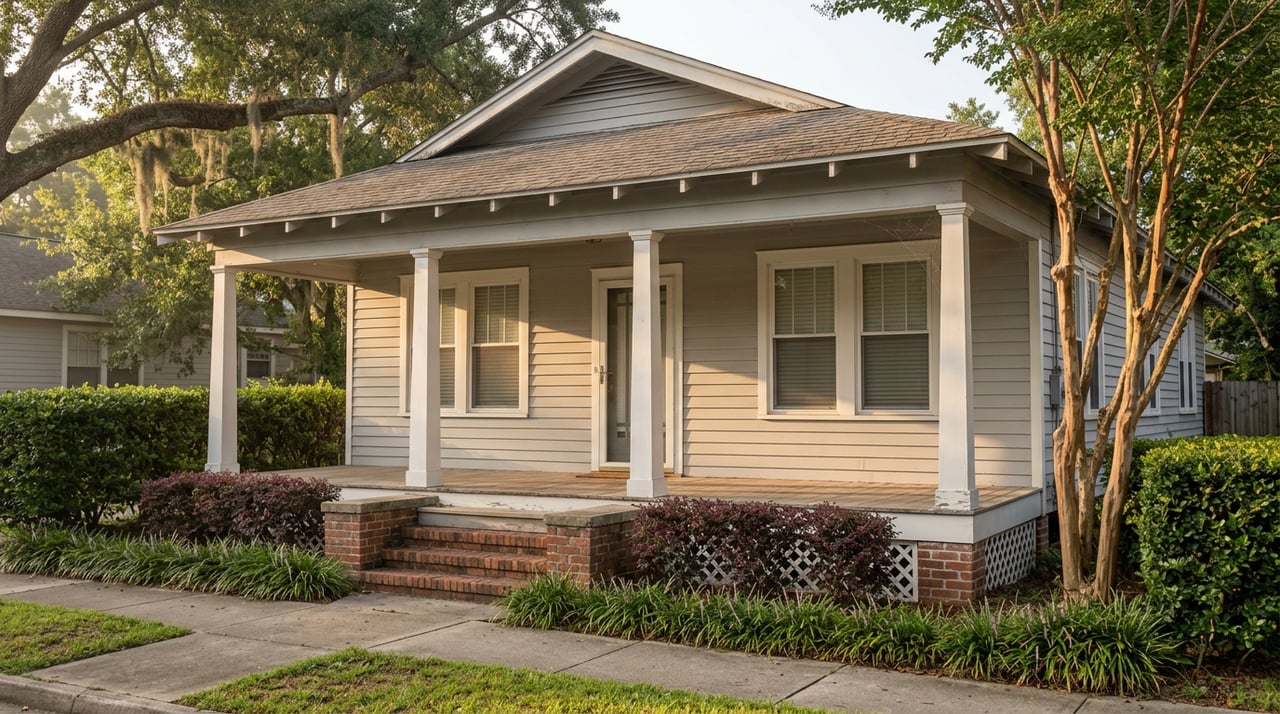
Newer slab-built subdivisions tend to move through this step quickly because there is no crawlspace to access and less structural wood exposed near grade. Older East Baton Rouge neighborhoods built on pier-and-beam foundations are a different story. State regulation requires inspectors to check crawl spaces of raised pier construction, but only where there is visible access, and getting that access on an older foundation sometimes takes more coordination than a same-day slab inspection.
Neighborhoods where this comes up most often include:
Many homes in these areas already carry an active termite bond from years of continuous service, which can often transfer to a new owner. That transfer is not automatic. It requires locating the paperwork, confirming the treatment history has not lapsed, and getting the servicing company to formally reassign coverage before closing. Sellers in these older pockets who start gathering that documentation the week they list, rather than the week before closing, give themselves far more room to keep the transaction on schedule.
A few practical steps keep this from becoming a last-minute scramble:
Does homeowners insurance cover termite damage in Louisiana? Generally, no. Most standard homeowners policies exclude termite damage, which is part of why lenders and buyers lean so heavily on the WDIR as their main line of defense before closing.
Is a termite bond the same thing as a WDIR? No. The WDIR is a point-in-time inspection report required for the sale itself. A termite bond is an ongoing service contract with a pest control company that can sometimes be transferred to a new owner, separate from the inspection required at closing.
Does seeing a swarm mean my house has termites? Not necessarily. LSU AgCenter's entomology team has noted that seeing swarmers around a house usually means termites are active somewhere in the neighborhood, not necessarily inside that specific structure. It is still worth a professional look if you are close to listing or closing.
None of this is meant to make the process feel more complicated than it needs to be. It is meant to save you from finding out about the 30-day window the hard way, three days before your closing table. A little planning around Baton Rouge's own termite calendar goes a long way toward keeping your transaction on the date everyone signed up for.
If you are getting ready to list a home in one of East Baton Rouge Parish's older neighborhoods, or you are further along in a purchase and want a second set of eyes on your closing timeline, Debra Sullivan and her team work these transactions across the parish every week and are glad to help you think through the timing before it becomes a problem.
Stay up to date on the latest real estate trends.
Experience personalized service, expert guidance, and dedicated support from a team committed to helping you buy or sell with confidence.