East Feliciana Parish Acreage Taxes Explained Before You Buy
August 13, 2026
August 13, 2026
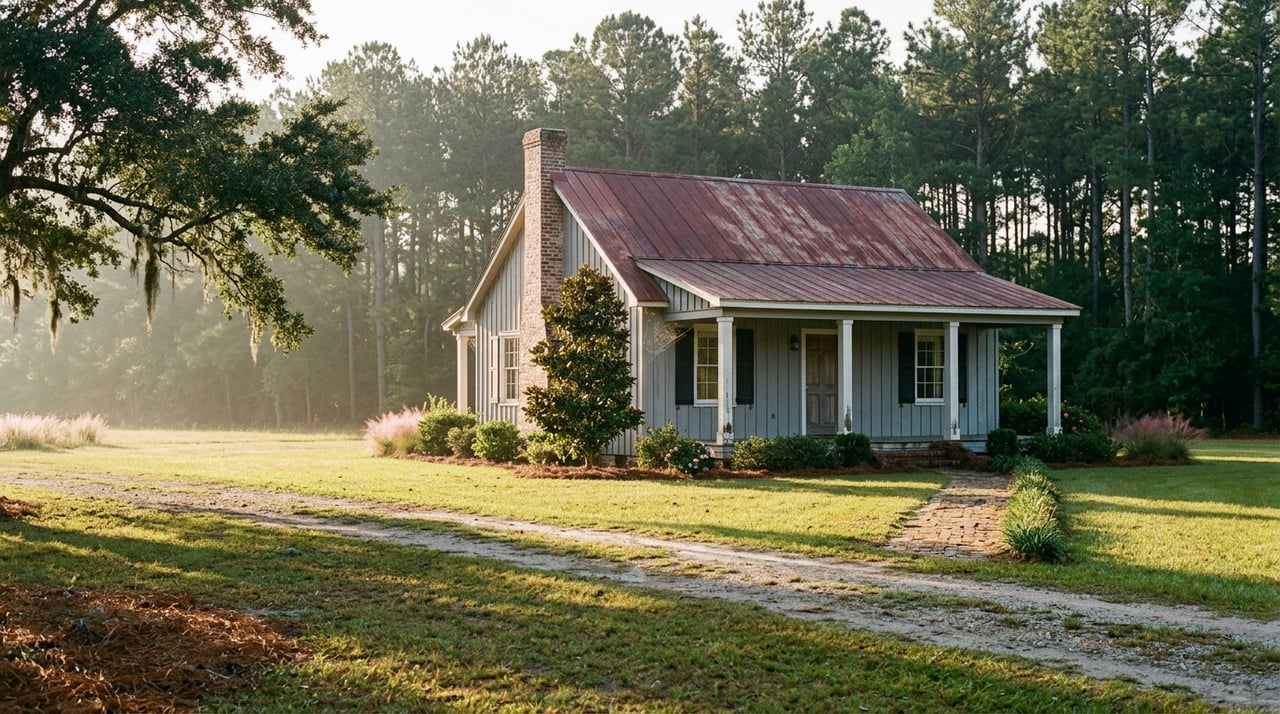
Picture a buyer walking a twelve-acre parcel off Battle Road outside Clinton. The listing sheet shows an oddly small number under annual taxes, maybe $180, maybe $300. It's easy to assume that figure is just how this land is taxed, a quirk of being rural. It isn't. That number exists because the current owner applied for a specific land classification years ago, and the classification, not the acreage itself, produces the discount. Change how the land is used, change who owns it, or simply let the paperwork lapse, and the number on next year's bill can move by a wide margin.
That gap between the tax bill a seller shows you and the tax bill you'll actually pay is the single most useful thing to understand before buying acreage in this parish.
Louisiana's constitution allows bona fide agricultural, horticultural, timber, or marsh land to be assessed at 10 percent of what's called use value rather than 10 percent of fair market value. Use value is tied to what the land can produce under continued agricultural, horticultural, or timber operation, not what a buyer would pay for it on the open market. To qualify, land generally needs to be at least three acres in size, or to have produced average gross agricultural income of at least $2,000 a year over the four years before the application.
A 2026 Louisiana property tax guide estimates that actively farmed land assessed this way sees its taxable value fall 80 to 95 percent below what straight market-value assessment would produce. In Avoyelles Parish, a comparable rural parish, the Tax Commission's published use-value rates translate to roughly 53 cents to $2.82 in actual tax owed per acre, depending on soil classification. East Feliciana Parish is governed by the same statewide use-value table, so that scale of discount applies here as well, even though the exact per-acre number depends on the specific soil class assigned to a given tract.
Once granted, that classification is permanent in every parish except Orleans and Jefferson, as long as the land keeps meeting the qualifying use. A working cattle operation or a managed timber tract can carry that low assessment indefinitely without refiling.
Here's the part that catches buyers off guard. Louisiana law presumes that land loses its agricultural or timber classification if it sells for four times its assessed use value. A hay pasture assessed at a few hundred dollars an acre under use value can easily sell for four times that simply because it sits along a paved parish road within reach of Clinton or Zachary. The sale price alone, not anything the buyer does afterward, can trigger the presumption that the land no longer qualifies.
Once eligibility is lost, whoever owns the property has 60 days to notify the assessor. Miss that window, or misrepresent continued qualifying use, and the penalty is steep: five times the difference between what was owed under a market-value assessment and what was actually paid under the use-value assessment, for every year the false certification stood.
None of this means a buyer should avoid land carrying a use-value assessment. It means the number on the listing sheet describes the seller's arrangement with the parish, not a guarantee that transfers automatically. Anyone buying acreage here with the intent to keep hay, cattle, or timber on it should ask the current owner's classification status and file the reapplication early rather than assume the number holds.
East Feliciana Parish's combined millage rate, the base percentage applied before any homestead or use-value adjustment even enters the picture, is 48.40 mills. According to a millage rate comparison drawn from the Louisiana Tax Commission's own annual reports, that's the lowest combined rate of any of Louisiana's 64 parishes. On a standardized $300,000 owner-occupied home with the homestead exemption applied, that works out to an effective rate around 0.36 percent.
Here are the ten lowest combined millage rates in the state:
| Parish | Combined Mills | Effective Rate on $300K Home |
|---|---|---|
| East Feliciana | 48.40 | 0.36% |
| St. Martin | 56.20 | 0.42% |
| Evangeline | 67.80 | 0.51% |
| Pointe Coupee | 69.80 | 0.52% |
| Plaquemines | 70.69 | 0.53% |
| Acadia | 71.80 | 0.54% |
| West Feliciana | 72.30 | 0.54% |
| Union | 72.88 | 0.55% |
| Iberia | 74.30 | 0.56% |
| Avoyelles | 75.70 | 0.57% |
But here's the twist worth sitting with. East Feliciana's median annual tax bill is $328, which is actually a bit higher than Allen Parish's median of $199, even though Allen's combined millage of 145.70 mills is roughly triple East Feliciana's. The rate isn't what lands on the bill. Assessed value does, and assessed value depends on home values, exemptions, and land classification working together. A parish can hold the lowest rate in the state and still produce a higher typical bill than a parish with a much steeper rate, simply because the underlying property values differ.
Louisiana's homestead exemption removes the first $75,000 of a primary residence's fair market value from taxation entirely. Take a home valued around $200,000, close to the parish's own town averages, and run the math using East Feliciana's actual combined rate: $200,000 minus the $75,000 exemption leaves $125,000. Assessed at 10 percent, that's $12,500. At 48.40 mills, that comes to roughly $605 a year before any ward-level or special district assessments layer on top.
That last caveat matters. Ward-level rates and special assessment districts, things like drainage or library millages, can push an individual bill above the parish's baseline number. The 48.40 figure is the starting point, not necessarily the final one on any specific parcel.
Home values across the parish cluster more tightly than a buyer coming from Baton Rouge might expect. Zillow's town-level averages put Clinton around $204,003, Jackson around $178,931, Ethel around $208,542, Norwood around $182,053, and Slaughter around $218,635. The spread between the cheapest and priciest town averages is well under $40,000.
That narrow spread means the bigger fork in the road for most buyers here isn't which town to pick. It's whether a given parcel comes with acreage carrying an active agricultural or timber classification, or whether it's a standard in-town homesite assessed at full residential rate. Two properties at the same purchase price can carry very different ongoing tax obligations depending on which side of that line they fall.
The same rural classification that shapes the tax math here also shapes how buyers finance a purchase. USDA Rural Development loans require the property to sit in an area generally under 35,000 in population, and every town in East Feliciana Parish, Clinton, Jackson, Ethel, Norwood, and Wilson, falls well under that line. Louisiana as a whole has only about 1.87 percent of its land area outside USDA eligibility for this program. For qualifying buyers, the USDA Rural Development loan program opens the door to zero-down financing, provided household income stays within 115 percent of the area's median.
Land activity in the parish leans toward larger tracts rather than small suburban lots. Recent listing data shows Clinton carries more acreage on the market than any other town in the parish, part of roughly a thousand to two thousand acres of farm and rural land listed at any given time, valued in aggregate somewhere around $14 to $15 million. Homes here also tend to sit on the market longer than in the denser Baton Rouge suburbs, often around 120 days, which fits a parish where government and state-level services, not a single dominant industry, anchor most local employment.
One recent example of larger acreage coming to market: in January 2026, the owner of a roughly 100-acre wildlife park in Ethel, previously known as Barn Hill Preserve, put the property up for sale, including all land and existing infrastructure. Whatever its next use, it's a reminder that this parish regularly sees large-acreage transactions, not just single-family resales.
A few questions worth asking before writing an offer on any rural parcel in East Feliciana Parish:
These aren't questions a portal listing page answers. They're the kind of local, parcel-specific homework that changes what a piece of East Feliciana Parish land actually costs to hold, long after closing day.
If you're weighing acreage, a homestead, or a move into East Feliciana Parish and want someone who can walk the specific numbers on a specific parcel with you, Debra Sullivan Dream Homes works this market regularly and can help you sort out what a property will actually cost to keep, not just what it costs to buy.
Stay up to date on the latest real estate trends.
Experience personalized service, expert guidance, and dedicated support from a team committed to helping you buy or sell with confidence.